Posted on

Choosing the right lock for your needs

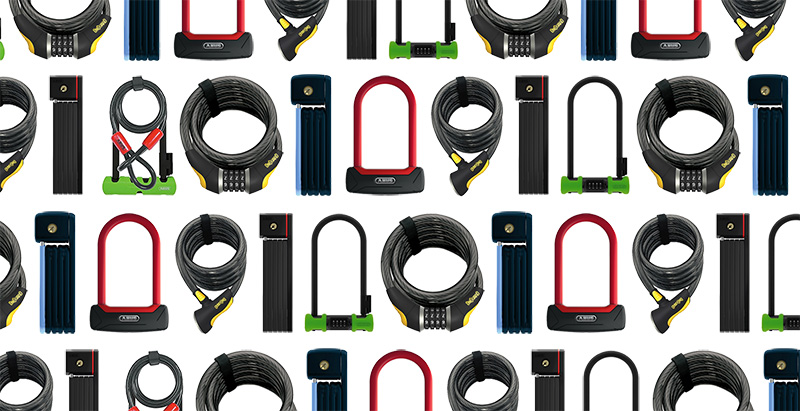
There are 4 common categories of locks:

1. Coiled cable locks

On these locks, typically the cable bit is around as thick as your little finger. They are cheap, lightweight, versatile in terms of what you lock your bike to, easy to carry but not very secure as they can be cut with hand tools like bolt cutters. These locks are good for locking your bike for short periods of time in a location that is fairly safe. For example https://www.goodcycles.org.au/product/onguarddobermancoilcombolock/
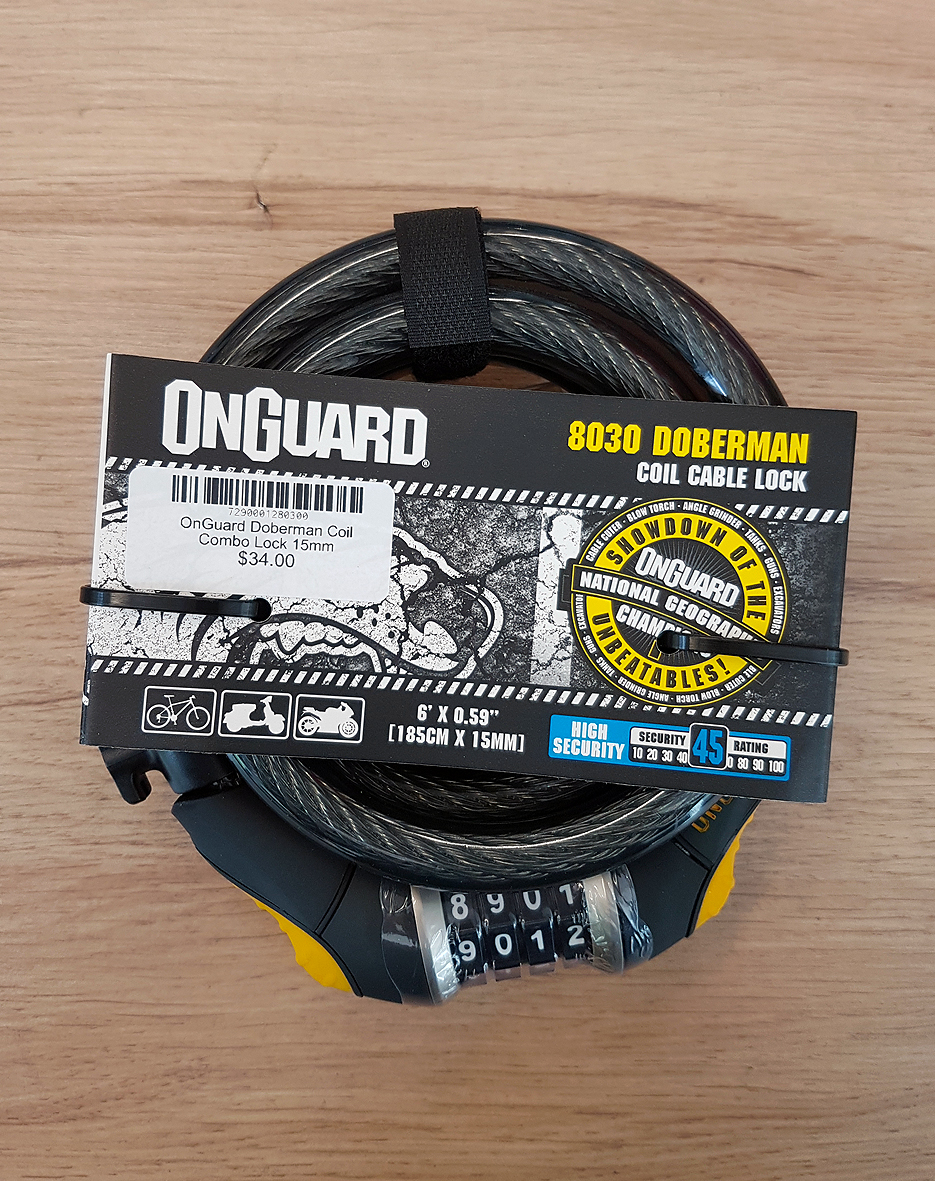
The OnGuard 8030 Coiled cable lock (available online or in-store)

2. Armoured Coil locks

Armoured Coil locks are thicker and heavier than the above. The inner cable has a shield of solid metal plates around it to prevent almost all hand tools from getting through it, while some have a coating designed to jam an angle grinder blade. They are much heavier than the smaller cable locks but still have the same versatility but are harder to carry on the bike. Example: https://www.goodcycles.org.au/product/lockonguardrottweiler8024/
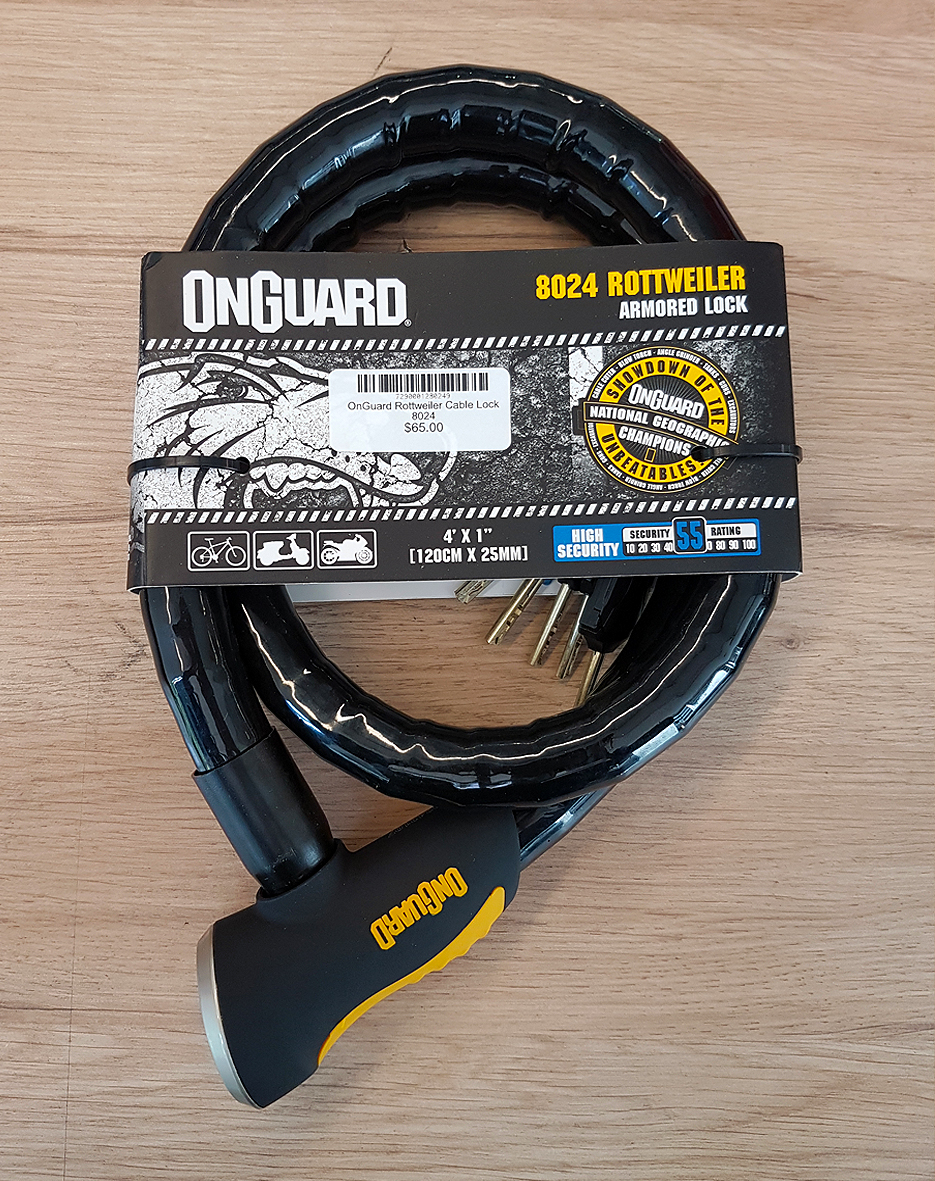
The OnGuard 8024 armored lock (available online or in-store)

3. D-Locks

D-Locks (also called U-locks or shackle locks) are the most secure locks. They are typically solid steel and need to be cut twice (rather than once) to free your bike. Usually heavy, fairly expensive, and a bit unwieldy to carry, but the best option for security. You can get mini D-locks which are lighter and easier to carry but their versatility in terms of what you lock your bike to are reduced. Great for locking your bike for long periods of time. We suggest locking your rear wheel and frame to the bike hoop or post. Example: https://www.goodcycles.org.au/product/abusultra410d-lock230mmx105mm/
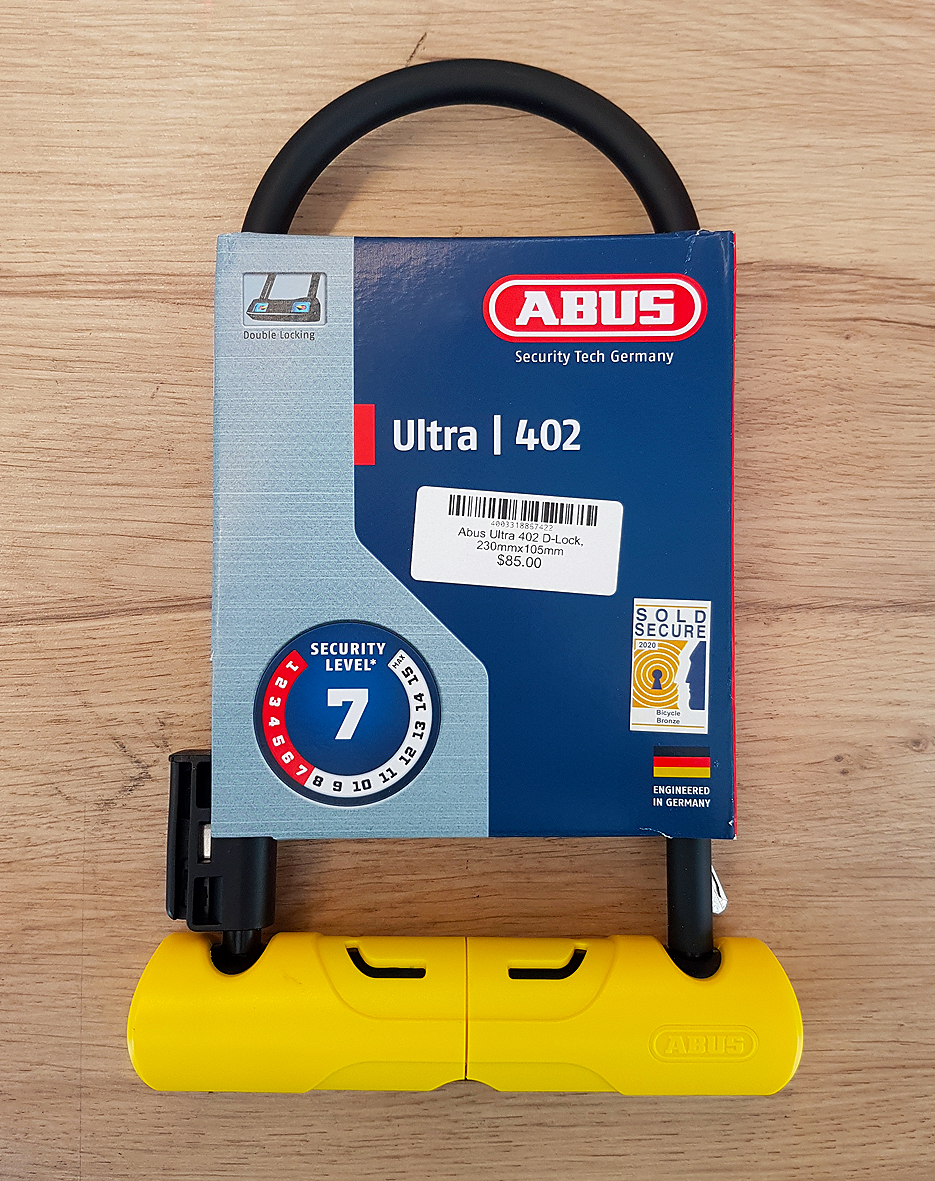
The Abus Ultra 402 D-lock (available online or in-store)

4. Folding plate locks


Folding plate locks, probably our favourite and most popular lock. Almost as secure as a D-lock but has the flexibility of a cable lock and carries well on the bike, they are fairly heavy though and not cheap. Good for commuting as most come with a good mount to hold the lock on your bike where a drink bottle cage would go. Example: https://www.goodcycles.org.au/product/abus-folding-lock-ugrip-bordo-5700-2/
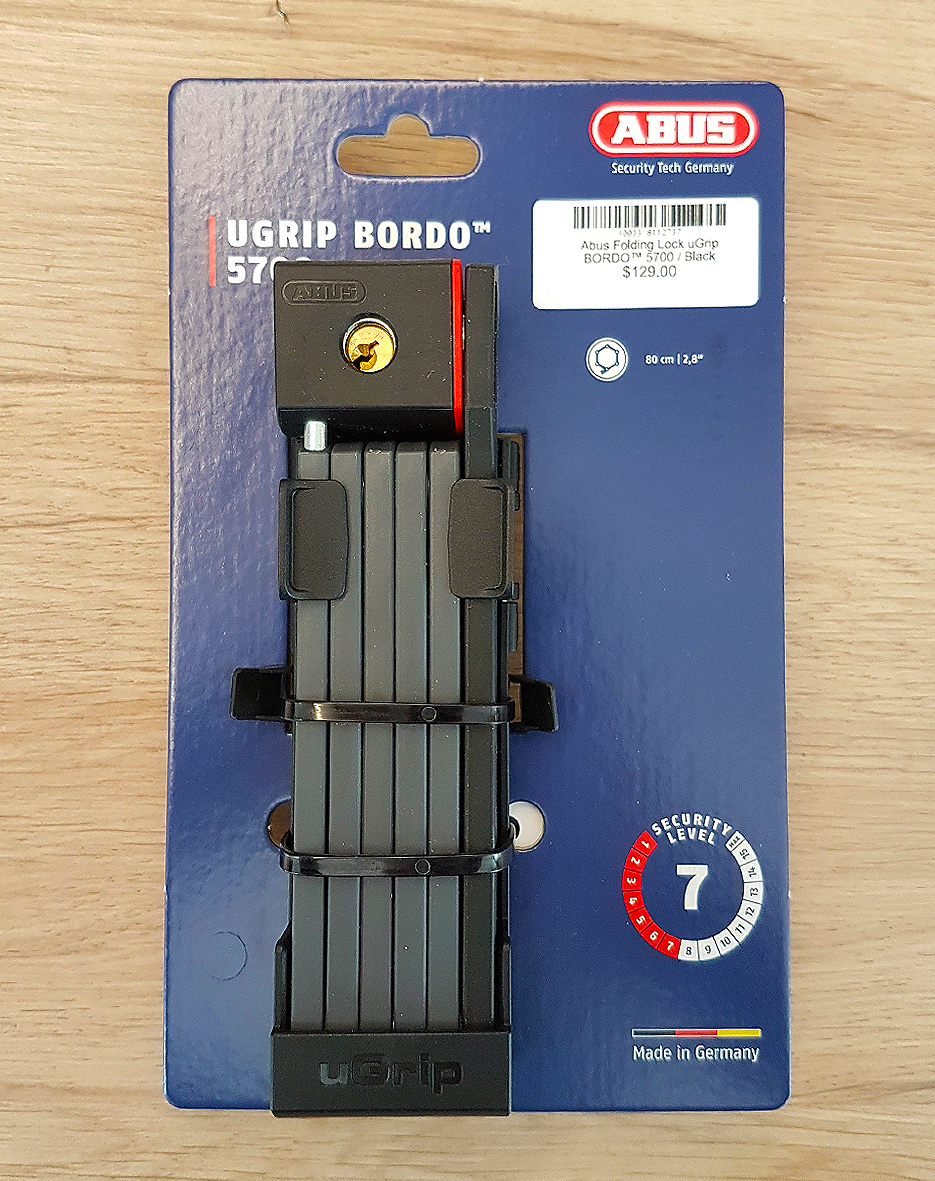
The Abus Ugrip Bordo 5700 lock (available online or in-store)

When choosing a lock consider these key questions

  • Where and for how long are you locking your bike?
  • How secure does your lock have to be?
  • How will you carry your lock?
  • Could you leave at work if you don’t make stops to and from work?
Hopefully, you never experience a stolen bike!

Posted on

Mental health care for all: let’s make it a reality #WorldMentalHealthDay

There are a lot of great initiatives going on. Just as well – it has been pretty tough going lately. Everything Good Cycles does to make mental health a reality for all is actively supported by you, our members. We do not provide a ‘mental health service’. There are other important and accessible initiatives to make a real difference to mental health and well-being, like:

  1. Promoting cycling
  2. Fostering participation
  3. Creating jobs 

Cycling is so effective for well-being that riding is one of the ‘alternative prescriptions’ doctors around the world recommend for mental health. If you want to know more about just how much you are helping yourself by cycling, read more from our friends at Bicycling Australia. 

Obviously, it’s a lot easier to benefit from cycling if you have access to a bike. That’s one of the reasons Good Cycles has donated 60 bikes in the last 12 months to help people participate in the social and economic life of our communities. It might include exercise, visiting friends, or getting to work. It doesn’t matter whether you ride for the mental health benefits; they happen anyway.

It takes a bit of coordination and planning to create jobs, and as supporters of Good Cycles, it’s one of the things our members enable. The research evidence is ‘strongly supportive of a causal relationship’ between unemployment and mental ill-health. Our jobs are specifically targeted for those who are under-represented in the workforce so it is also one of the initiatives that improves mental health equity. Thanks again, members. 


Posted on

6 cycling resources to keep you rolling

1. Melbourne Bike Grid Map (Google Maps)

See all of the continuous paths available around Melbourne and Geelong with Google maps in Cycling mode. The Melbourne Bike Grip Map shows you a visualisation of all of the bike paths available to you so you can max out your 5km bubble.

2. Ride With GPS

One of our favourite tools for planning rides whether short or long. Ride with GPS offers plenty of different map overlays to help you plan your route while also showing other people’s routes that you can take inspiration from.

3. arevo Journey Planner app

Another tool we use to help us plan journeys is arevo. The app uses colour to represent different types of roads or cycling paths, handy when you are looking to use off-road paths only.

Bonus points for it being made here in Victoria!

4. Park Tool’s Repair Help

Park Tool makes workshop grade bike tools, but they also have a handy website, Repair Help, to help you fix your own bike. Park Tool’s Repair Help covers everything from fixing a flat to building a wheel. Useful when you can’t make it into our shop for a service!

5. Sheldon Brown

The late Sheldon Brown was a delightfully eccentric American bicycle mechanic (amongst many other things) and he created this website to help everyone from bike mechanic nerds to everyday cyclists trying to demystify tyre sizing. 

It’s a great resource when fixing up older bikes to check for part sizes and compatibility. The website is very low tech (it’s 20+ years old) but that means it loads fast!

6. Desire Lines

Desire Lines is an Australian website showcasing events, bike touring and bikepacking ride reports/essays and much more. Community driven, it always has great photos and is great for dreaming of future trips!

These are some of our favourite cycling resources and we trust they’ll become some of yours too. If you need some bits or pieces to keep the adventures going head to our online shop, we deliver Australia-wide and 100% of your purchase goes towards our mission.


Bike maintenance at home

Still want more? We’re hosting an online bike maintenance session to keep you pedaling through lockdown!

Date: Wednesday 22 September, 2022

Time: 5pm – 6pm

Cost: $25 / FREE for Good Cycles members (check your inbox for the promo code)

Posted on

Social impact at Good Cycles

Entry-level jobs represented 22% of the job market 15 years ago but are now under 10%.

These jobs are especially important to young people. For them more than other workers, entry-level jobs are essential to build skills, establish a base rate of income and provide the first steps in career development. 

The good news is Good Cycles Street Teams are providing essential work that contributes to pandemic safety, urban amenity, and environmental sustainability. So despite the economic downturn, Good Cycles is growing in areas of genuine need, and in doing so, we are increasing access to opportunity through entry-level jobs.

Good Cycles street teams are providing essential work

What are the benefits of more entry-level jobs?

The focus on entry-level jobs and appropriate training has translated into impressive increases in employees’ skills. Those completing the technical training and mastering the skills required for proficiency in work performance jumped from 77% to 88%. 

Even more important is the increase in transferable skills. The so-called ‘soft’ skills that include multifaceted capabilities such as teamwork, communication and problem-solving are among the most critical for maintaining employment and progressing through professional levels. Good Cycles’ employees attained more than 20% improvement on average in this skill set.

“[T]eam membership [means] always communicating …making sure you are helping people out so they can get things done: When we are a team, when they evolve, we evolve together.

– Good Cycles Supported Employee

Entry-level jobs increase transferable skills

We all benefit from a strong and diverse society with opportunity available to all

Thanks to partnerships with community groups and services who help us to take affirmative action to employ under-represented workers, Good Cycles has attracted a more diverse group of employees. Diversity and inclusion are a central means for us to achieve productivity and realise the development potential of our workforce. 

Good Cycles’ diversity has increased in the last 12 months. We are celebrating a 15% increase in employees with non-English speaking backgrounds, 4% increase in LGBTQI+ employment and 5% increase in the proportion of women we employ.

“The main thing has been meeting people and learning about them, and me being better able to understand different types of people in the workplace.”

– Good Cycles Supported Employee

We all benefit from a strong and diverse society

Young people benefit by overcoming barriers to employment

Good Cycles Street Team members face an average of 5 barriers to employment. Each barrier to employment multiplies the effect of disadvantage on young people. It’s easy to focus on the negatives, but think about that 20% average increase in skills our employees achieved this year. With the opportunities to develop through paid work, young people gain resilience in work and in life. Disadvantage can be overwhelmed by resilience factors. 

“[Y]ou’re able to play to your strengths, as well as work outside your toolkit of skills. Every new project I’ve worked on has brought its own challenges, and I definitely have had to step into different leadership challenges”.

– Good Cycles Supported Employee

The practical approaches to entry-level employment that your support enables means that more young people can work their way to a positive and resilient future. We thank you for being part of the solution. 

Posted on

Chris Booton

Chris is a trained governance professional specialising in providing company secretarial services to not-for-profit organisations, social enterprises and charities.

With over 30 years’ experience in a range of different businesses and industry sectors in the UK and Australia, Chris has a good understanding of the benefits of practical and effective corporate governance in organisations. As well as his role at Good Cycles, Chris is currently company secretary for the Australasian Sonographers Association Ltd, Wimmera Southern Mallee Development Ltd and Big Group Hug Ltd.

Chris is also a fair-weather commuter and leisure cyclist.

Posted on

How to carry more on your bike rather than your back

How to carry more on your bike

The rear rack

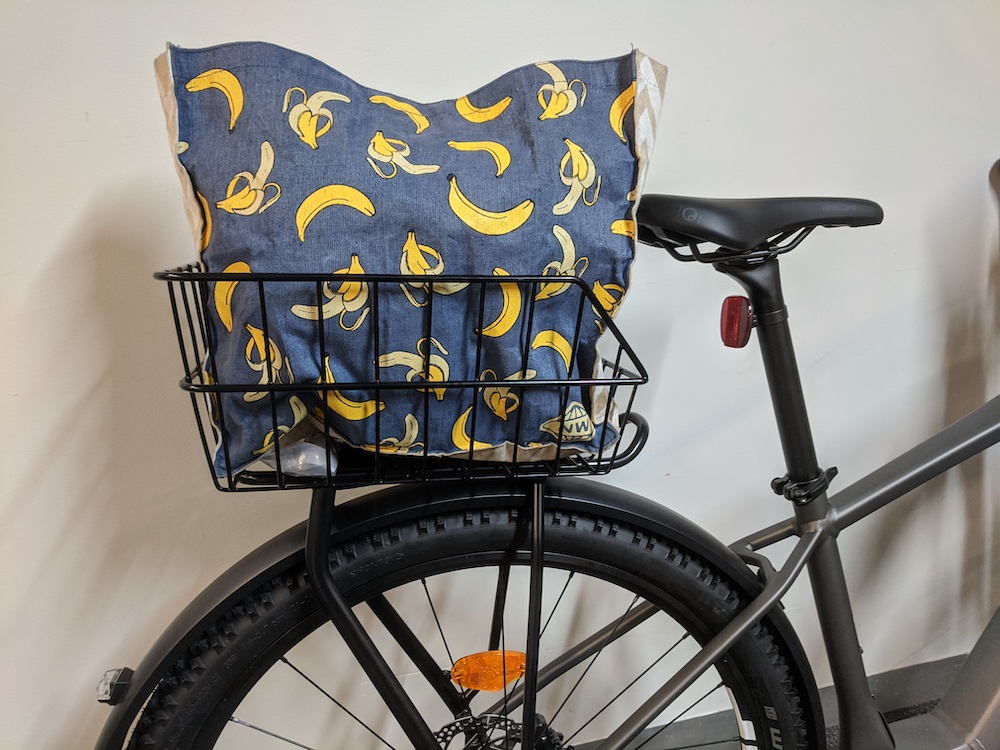
The most common is a rear rack. Bolted to your frame, rear racks can typically carry 15kgs+ of gear. Once you have the rack you can add a simple and versatile basket bolted to the rack to carry your bag or a bag of shopping, this setup typically costs around $100. 


Rear rack and basket to carry gear on your bike
A rear rack and basket with a bag full of shopping

Panniers

If you want a more streamlined solution, then a pannier (or two) that mount to the rear rack can be a good option. Panniers are waterproof and quite easy to fit and remove. Panniers have a lower centre of gravity compared with a basket, making the bike a bit more stable. We stock Ortlieb panniers which are made in Germany and come in a variety of styles, from the simple single pannier which is basically a waterproof roll top bag to a fancy briefcase-style bag that has a padded laptop insert.

Mounted pannier  to carry gear on your bike
The Ortlieb Urban Back-Roller Single Pannier Bag (available online or in-store)

The front basket

A front basket is another option that is becoming more popular. Front baskets can be mounted to almost any bike and have the advantage of suiting bikes that may not have the mount points for a rear rack. They can carry odd-shaped items and you can keep an eye on your gear. Front baskets start at $90.

Front basket to carry gear on your bike
A front basket allows you to keep an eye on your cargo

Bikepacking bags

If your bike has no accommodations for mounting racks or baskets – it may be a carbon fibre road or mountain bike – or you want to keep your bike as light as possible, then bikepacking bags can be a great option. 

Whilst originally designed for superlight off-road bike touring they can be good in the city too. The most popular style is a seatpost mounted bag. They can’t carry as much as a pannier or basket – think a change of clothes and lunch- but they can be mounted to any bike.

Seatpost mounted bag to carry gear on your bike
The Pro Discover Bikepacking Saddle Bag (available online or in-store)

Choose what’s best for you

If you want to see our range have a browse online and if you have any questions about what will work on your bike drop in and have a chat.

Posted on

How meaningful employment unlocks opportunities

Omer was always able to find work, however he experienced discrimination and racism due to his refugee background. Compounded by working in workplaces unsupportive of employee wellbeing and professional development, his previous jobs gave him little sense of purpose, nor – more significantly – provided for any meaningful progression along the direction of his desired career pathway: working in the field of community and youth work.

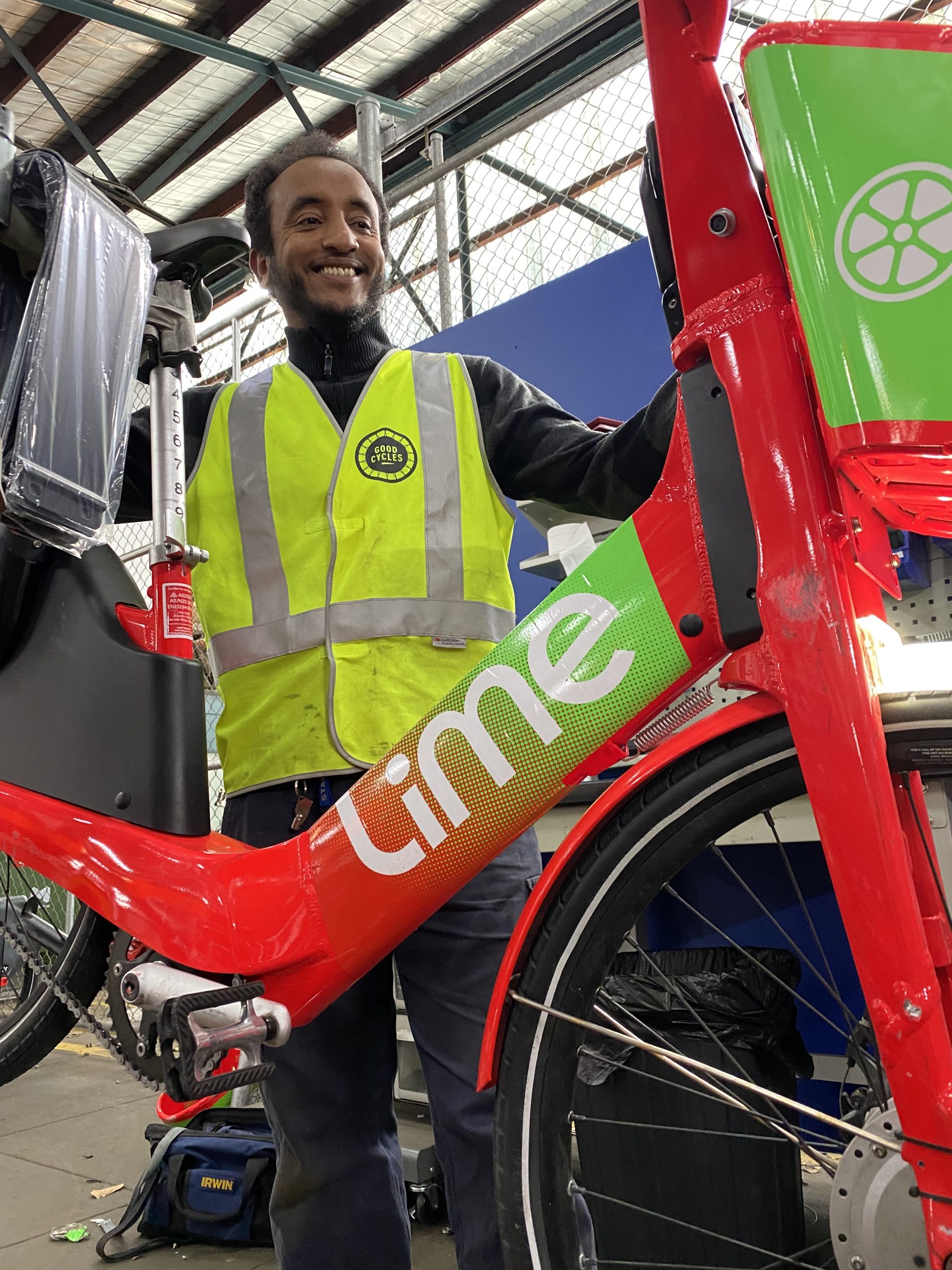
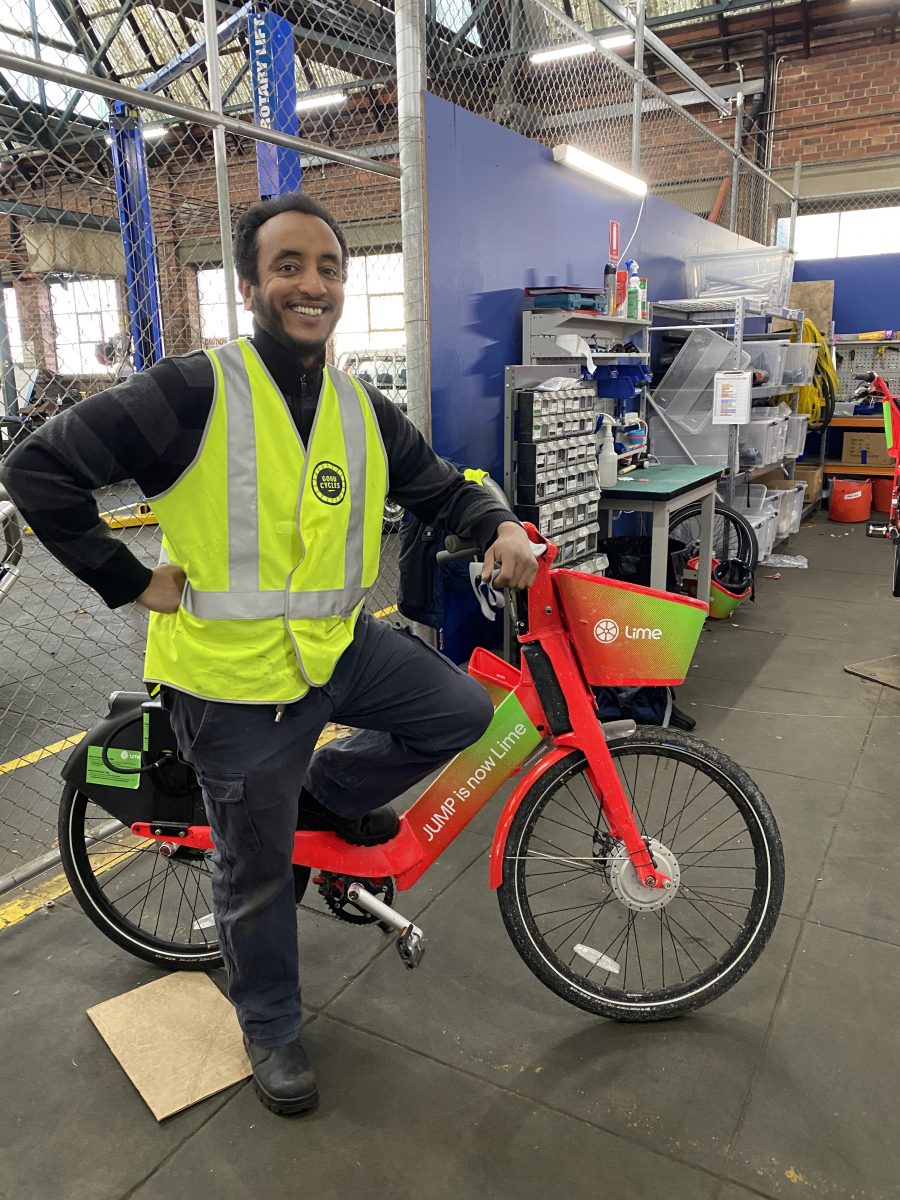
Finding his way to Good Cycles, he became a part of the Lime e-bike team as a bicycle mechanic. Describing Good Cycles as “the first business in which I worked that actually implemented its OHS and anti-discrimination policies,” Omer has found Good Cycles as a place “where people can fairly thrive and succeed.”

While learning about bike share and honing his skills as a mechanic, Omer was also able to build connections and come to learn about social enterprise.  Omer recalls,


“In my first week at Good Cycles, I went into Kate [Head of People and Impact]’s office … and she explained to me what a social enterprise was, what she studied, and what her position was. It was probably the biggest ‘light bulb’ moment in my career. The fact that you can help people and still be profitable was a new concept to me that I’m still fascinated with until this day. I made the decision to work in community service but didn’t know in what capacity or how. All I knew is if I hung around Good Cycles I would get there somehow.”


For the first time, Omer felt valued, engaged, and safe at work and from that his aspirations to become a community service worker was crystallised.


“Having a caring nature I think I always had the cultural awareness and aptitude for social work. But I never knew that is what I wanted to do. It was Kate that really helped me tap into that and believe that I can make it into a career.”


Being a father of two, he needed to find a solution that would accommodate his desire to study while being able to support his family. Omer’s determination to fulfill his career aspirations and help his community was not ignored.


“Good Cycles gave me the opportunity to work part-time and have minimal impact on my income as it allows me to work overnight. Without this, it will be difficult to study and cover my expenses.”


When young people are given the opportunity to be heard and feel included, their professional and personal development grows, unlocking a bounty of employment pathways for them.


“Kate introduced me to a youth work organisation and people in the Programs team are always looking out for any opportunities, whether bike mechanic or community work related.”


By finding meaningful work and building connections at Good Cycles, Omer has been able to overcome barriers and discover his ambition.


“As an aspiring community service worker, my experience at Good Cycles is critical. I have got to know people from diverse backgrounds and their experiences. … some of their stories are just amazing, I have come to truly appreciate it. Being in this environment has provided me with invaluable experience…”

Posted on

Bike fit – making your bike more comfortable

While professional racers and really serious cyclists will pay a professional bike fitter or physiotherapist hundreds to tune their bike to fit them perfectly for speed and efficiency, everyday commuters and recreational riders can benefit a lot from small (and cheap) changes to how their bike fits them.

First of all, the below is based on the fact that your bike is the right size for you.

Even though bike manufacturers make bikes in a wide range of sizes, the bike you have, or want to buy might not suit your body proportions (such as legs vs arm length). Additionally, your flexibility may change as you get older so a bike that once fit well and was comfortable may not fit so well anymore.

Saddle height

The easiest and most obvious change to how a bike fits is the saddle height. Tall people have their saddles higher than short people, or more specifically people with long legs have their saddles higher than those with short legs!


Adjusted saddle height
An easy adjustment to make is the saddle height

Having your saddle at the right height will make your bike more comfortable and more efficient. The general rule is that you want a slight bend (~10 degrees) in your knee at the bottom of the pedal stroke. A too high saddle will cause your hips to rock side to side over the saddle, and a too low saddle will mean your knees bend more than needed which can cause you to get sore.

Stem length

At the other end of the bike is the handlebars and stem. Changing how they are setup can also have an effect on how comfortable your bike is. You can change the length of the stem (this is the part of the bike that connects the fork to the handlebars) and change the width and shape of the handlebars.

If you have long arms and feel a bit ‘cramped’ on the bike a longer stem may help stretch you out and make the bike more comfortable. Likewise if you have short arms or the bike feels too long and stretched out a shorter stem will shorten the reach on the bike and make it fit better.

flipped bike stem
The stem can be ‘flipped’. Left: a positive rise. Right: a negative drop

If you’re feeling like you are bending too far down to the handlebars then raising the handlebars can really improve the comfort of your bike.

The stem can be ‘flipped’ to either be a positive ‘rise’ to get the bars higher or negative ‘drop’ to get the bars lower, and the good news is that this can be done just by using the parts already on the bike. Likewise, you may be able to swap some headset spacers that are above the stem to below the stem to raise the bars higher without buying any new parts.

Headset spacers
Headset spacers may be moved to create more height

If the bars are still too low after rearranging spacers and flipping the stem then a new stem with a higher rise can make the bike feel better. New stems range in price from $45 and upwards, so not an expensive purchase to make your bike more comfortable!

Handlebars

Finally, handlebar width and shape can affect how your bike fits you. Road bike drop handlebars (like they use on the Tour de France) come in widths from 36cm to 46cm to suit different width shoulders.

3 sets of drop handlebars
Drop handlebars, commonly seen on road bikes

Flat handlebars like on mountain bikes and many commuter bikes come in an even bigger range of widths, rises and shapes. While the width of flat bars is less dependent on shoulder width (you want wide bars on mountain bikes to give you good control on off road trails) changing the sweep or width of your bars can make the bike more comfortable and often alleviate wrist and shoulder pain.

3 sets of flat handlebars
Flat handlebars, commonly seen on mountain and commuter bikes

Want to know more?

Drop into one of our stores if you have any questions about bike fit or would like some advice on making your bike more comfortable.

Posted on

Experiences of starting the employment journey

Lucas packing an ebike to begin work

Young people are showing resilience and resourcefulness in finding their path despite youth unemployment at twice the adult rate, a 20% drop in entry-level jobs in their generation, and a pandemic to contend with.

Lucas sat down with us for a chat to reflect on his journey so far. His example offers insight into how a young person builds the transferable skills they need in today’s workplaces and gains resilience and confidence through work. By lowering barriers to employment, providing a breadth of experience, and ensuring an inclusive and safe work environment, we are empowering the next generation to fulfill their potential.

Could you describe any challenges or difficulties finding employment before you started at Good Cycles?

At 18 years old it can be hard to find a job that requires no qualifications. This job didn’t require experience but instead focused on gaining experience on the job. 

Before this job, I had a boss who really did not like me. So, I’ve definitely found working with people that do not actively root against you is pretty great. Good Cycles supervisors create an environment that feels safe, where we feel comfortable coming to them.

Have you developed any new skills in your role so far? 

I would definitely say I’m much better at cleaning! I have very much enjoyed working in Car Services (detailing car share vehicles and keeping them COVID-safe). It allows me to get outside, doing some activity (riding a bike to move from job to job) as well as seeing parts of the city I’ve never seen before. I have a much better sense of direction now. 

A highlight was being able to recommend and train a new employee in car services. It is really great that Good Cycles gave me that input… I really did enjoy the opportunity to be able to teach them about the job.

As of recently, I’ve been gaining experience in the office, and not so much actually cleaning the cars. This has given me more of a chance to connect with more of the team. I am realising just how much work supervisors do, not only in Car Services, but also in Environmental Services (reducing waste going to landfill). The work that has been put in, especially recently because we’ve just changed the software we use – has been incredible.

Lucas gaining experience in the office
Working both in the office and within the street team has given Lucas the chance to broaden his skills

Has being part of the LGBTIQ+ community affected your feeling of belonging, particularly in the workplace?

Being in a position where you sort of have to come out to the people you work with because of a name change is a super annoying thing to do, and definitely, something that I found extremely uncomfortable. But I’ve found that everyone was very accommodating and just all-around nice.

Has the COVID-19 pandemic and lockdowns affected your work?

During the first lockdown, I stopped working, as I had family at risk and my income was not the most important in the household. I came back between lockdowns, and during the second one, it was pretty clear that everyone was being very careful and safe… wearing masks and disinfecting the warehouse and equipment.

How does your current employment make you feel?  

I’m honestly just glad I have employment now, and it doesn’t seem to be changing anytime soon. I’m feeling a lot more relaxed having the financial stability that this job has afforded me. I’m currently still living at home, but I’m planning on moving out by the end of the month. This job has given me the opportunity to gain so much more independence. 

Head to our impact page to learn more about how we help young people on their employment journeys.

Posted on

Why your drivetrain needs replacing

A chain and cassette with a chain checker tool

Well here we’ll explain what we are measuring with that gauge and why your drivetrain needs replacing. The drivetrain is what most mechanics call the chain, cassette (the rear cogs) and chainrings (the front cogs).

The chain checker tool

The tool we drop into the chain is a chain checker, and it measures how worn a chain is. The tool itself is trying to push the links of the chain apart to check how worn the rollers are. Chain wear is usually expressed in a percentage, i.e 0.75% worn. 

A chain checker tool
Chain checker tool

When a chain is 0.75% worn a new chain should mesh and shift well with the old cassette and chainrings on the bike, the chain wear is used to approximate wear on the cassette also (it can be hard to actually see or measure wear on cassettes until they are really worn out).

So why do you need to replace the chain and possibly cassette and chainrings?

As the rollers of your chain wear, they start wearing into the hollows between the teeth on the cassette and chainring, they also start wearing the teeth on them.

If a chain cassette is really worn – typically well past 1% on the gauge – the fit between the rollers on the chain and the hollows on the cassette is poor and there is a lot of slop between them. When you put some power down, say taking off at the lights or riding up a hill, the chain can jump off the cassette. This is horrible to ride and can be dangerous – think about it happening in the middle of an intersection or pushing hard up a hill out of the saddle!

The smaller cogs on a cassette wear out sooner than the larger cogs simply because there are more teeth to spread the wear across, 11 or 12 teeth vs 20+ teeth. The same goes for chainrings with 40+ teeth.

A worn bicycle cassette
A worn cassette

Over time the chain and cassette become a matched pair, like old friends that get each other’s jokes. If you change one and not the other the drivetrain can perform much worse than if they had been left as a pair! Hence why we mostly recommend changing the chain and cassette together, both being new means they will work well together.

You can just change the chain if the chain is not too worn ~0.5%, this is a good approach on higher end bikes where the cassettes can cost $150+.

While most manufacturers quote 4,000kms as an estimated life of a chain this varies based on how well the chain is cared for (wiped clean and lubed) and how the riders pedals – soft spinning or more powerful efforts. 

If you’re having issues with your chain skipping or want us to check your chain for wear, drop into one of three shops: Melbourne CBD, Docklands and Geelong and we’ll check it out.

Posted on

Career development as-it-happens at Good Cycles

The Good Cycles workshop

Abby had some injuries that meant she had to revise her career path as an auto-mechanic. It involved a period of unemployment and it hasn’t been a straightforward process to get back into work. 

Abby is managing disabilities from those past injuries and has had to explain the gap in her resume many times. But that wasn’t all that potential employers wanted her to explain. In Abby’s experience ‘a lot of people hold prejudice about the way queer people present themselves’. 

A stand out attitude and aptitude

According to our Head Mechanic, Mike Dann, attitude and aptitude stood out in Abby. 

‘She is a fast learner and quick to pick up on how things are done in the shop by watching the other staff members. She’s proactive about learning new skills and doing research on new products’. 

Abby is modest about her skills. She says she comes from a ‘bike family’. She finds it rewarding to work on a range of different bikes and to try new jobs. ‘I like problem-solving a lot so when I solve a problem with a bike and a customer is happy that it’s fixed, it makes me feel great’.

Mike takes a lot of care in training mechanics. He says the variety of jobs trainees get to do is important. ‘We have simple to complex repair jobs coming in, but we also expect employees to sell bikes and provide guidance to customers. The variety means employees like Abby can put a lot in their CV’.

Head mechanic, Mike Dann, in the Good Cycles workshop
Mike Dann, Good Cycles Head Mechanic

‘With someone like Abby, who picks things up fast, I will do a quick demo, maybe provide a technical guide online and then let them do it themselves, rather than helicopter them. It is important to have some time to do new jobs and figure out how it all works in your own time rather than someone over your shoulder pointing everything out.’

Abby is currently doing internal cable routing. With skills she already knows, she’s getting more confident, faster, and efficient. She is also honing her skills talking to customers: explaining mechanical concepts to customers with less bicycle know-how, and giving a clear reason why something needs to be replaced or repaired. 

Social and professional connections

Building social networks and professional connections is also part of the experience at Good Cycles. Abby says, ‘I’ve met people through Good Cycle’s social events. Those events have been awesome to connect, and that’s what I look forward to post lockdown’.

‘Honestly, it’s the best job I’ve had and Mike is the best supervisor I’ve ever had’. 

Mike sees Abby rapidly expanding her mechanical repertoire and selling high-value items in the shop. ‘I can see her in a permanent job as a bike mechanic in a shop, for sure’.

Posted on

Cory Boardman

Cory’s core value is ‘helping people’. Through a number of different careers through the years, he’s always been focused upon helping people achieve their best.

Following a career largely revolving around teaching adults how to use IT, Cory moved into the bicycle industry as the National Ride2Work Program Co-ordinator for Bicycle Network. He then worked in a bike shop for a number of years, instrumental in setting up Brompton Junction Melbourne before joining Good Cycles.

He’s very much just the ‘transport cyclist’ these days – as are his family.

Posted on

4 tips to get the most out of your eBike

ebikes

Many of the young people we employ ride a range of eBikes and eCargo bikes to assist with their jobs, so we are no strangers to eBikes. While simple to use we want to share our top tips to using an e-Bike, (some of which can also be good practice on a regular bike.)

1. Change down gears when slowing down

As you come to a stop, try and get into the habit of changing down into an easier gear. This helps in many ways, firstly it will make it easier to accelerate off again, as the motor will be able to give you the most assistance straight away. Secondly it will protect the moving parts. Once up to speed then change up to the gear which will allow you to cruise best at the 25km/hr limit.

Focus Paralane Square 6.7 eBike
The Focus Paralane Square 6.7 eBike

2. Back off a little when changing gears

eBike systems put a lot of strain on bicycle chains and gears, in many ways they have not yet evolved to handle the amount of energy the motor puts through them. With eBikes, when you need to change to an easier gear, just pushing the shifter, without decreasing the amount of energy you are pushing through the pedals, causes the chain to crunch across the gears. So even though you need to keep pedalling to change gears, do it gently. Pedal gently, so that they are still turning gently, but not applying power. This gives time for the chain to move to the new gear before you start pedalling normally again.

3. Slow down earlier

Because eBikes give you more speed and power, braking becomes all the more important. Even at the lightest assisted gear, an eBike can add around 50 watts to your pedal stroke. This means you’ll want to slow down well ahead of stop signs and road crossings, and far earlier than you would on a slower-moving bike. It’s important to get to know your brakes and their relative power, so you can assess the safest time to start slowing down.

eBike battery on charge
An eBike battery on charge

4. Don’t forget to recharge

While you can ride an eBike without a battery they have a reinforced frame to accommodate the battery and motor, so they are much heavier than a regular bike. To keep you moving efficiently, remember to charge your battery regularly so you don’t get caught out. If you can’t park your bike near an electrical outlet, look for the instructions to remove the battery so you can charge it separately from the bike.

Following these tips will make your travels on an eBike easier, safer and help protect the gears so they don’t wear out too quickly and start slipping.

Are your eBike gears seeming a little off? Bring it in for a service at one of our three service centres. We can service the mechanical parts of all eBikes and can work on the electrics of Shimano and Bosch eBike systems.

Posted on

Making the commute work

Jen and Kate with eBikes

More and more people are getting on a bike in 2021, particularly to commute to work. And our team is no different.

Here are some stories from our team members who choose to cycle to work and what works best for them.

A reliable solution for Kate

I wanted a reliable solution to my commute to work. My trip is only 8km but public transport is really crowded and ends up taking a long time. A car isn’t practical at all – partly because of the cost of parking and partly because of how long it takes in stop-start traffic.

I was riding a regular bike but I found the weight of all the gear I carry was making the trip a bit of a hassle. I would arrive at work feeling dishevelled – especially if there was a headwind or if the weather was hot or wet. And public transport is even more terrible on days like that. 

Moving to an electric bike changed everything for me. Now I can carry everything I want to without hassles. I am a lot fitter but I don’t have to worry about arriving looking like I’ve been dragged through a hedge. I lost about 4 kg just by riding regularly! In fact, I barely use a car now.

For me the electric bike is 50% of the solution and great accessories is the other 50%. When you’ve got the right gear you can ride conveniently in any weather. 

Kate with an ebike and gloves on
Kate with her Pearl Izumi gloves on

One of my favourite accessories is my trusty Quad Lock so my phone (i.e. navigation) is securely mounted on my handle bars. Other accessories are to manage the weather conditions:

  • a merino gaiter that stops me getting cold or getting earaches in the wind
  • water repelling gloves with touchscreen fingertips so you can still operate your phone on cold mornings 
  • waterproof rain jacket and pull-on waterproof pants
  • Merry People boots: you cannot get cold or wet in them

A new way to commute to work for Jen

I never thought I’d commute to work by bike, it just never occurred to me as something I could do. I’d only ever ridden for leisure and riding on the road seemed scary. My thoughts and attitude towards commuting changed when I started work at Good Cycles. Most of my colleagues cycled to work and public transport had long lost its appeal even before the pandemic. Hearing Kate’s story of how she began commuting on an eBike sparked my intrigue even further. After many questions and much support from my colleagues I realised; I can ride a bike to work. 

I got my hands on an eBike, I planned my route, I did a test ride with a friend and I haven’t looked back since.

Riding an eBike makes my 30km round trip to work a breeze, especially when it comes to the hills in my neighbourhood. Time I once spent sedentary and mindlessly scrolling through social media on a bus, train or tram is now spent moving my body, breathing the fresh air and arriving at my destination with a clear mind. It takes the same amount of time to cycle or take public transport, but the benefits of cycling for my mind and body just can’t be beaten. It’s easily one of the best decisions I’ve made for myself. 

As a first time commuter, my favourite accessories are:

  • a drink bottle and bottle cage, there is nothing fun about riding dehydrated
  • a quadlock for mounting my phone with the arevo app to help me plan my routes
  • and give me panniers over a handbag any day. It blows my mind how much they can hold and I can’t even tell they’re on the bike, even when loaded up
Quad Lock mounted on bike handlebars
Quad Lock mounted on Jen’s handlebars

We hope these stories inspire you to ride to work if you don’t already!

An eBike is a very approachable way to begin commuting if you’re just starting out or have a lot to carry with you. Take a look at our range for a bike suited to your specific needs.

Posted on

Gravel bikes – the hot new thing?

Norco Search XR S2 gravel bike

Basically, gravel bikes are great for doing a lot of things. They make a good bike for exploring gravel roads and dirt tracks obviously, but they also make great commuters, light touring bikes and, at a pinch, do a decent impersonation of a road bike.

While they look superficially like a traditional road bike from a distance – drop handlebars, 700c wheels and a slightly sloping top tube – up close they are quite different. 

On a gravel bike you’ll find:

  • wider tyres, typically 32-45mm wide
  • lower gearing making them better for riding up steep hills
  • a longer wheelbase compared to a road bike making them more stable
  • the frames often have the capacity to mount racks, mudguards and extra drink bottles.
Focus Atlas 6.7 gravel bike
Focus Atlas 6.7

Changing the tyres on a gravel bike can really change its personality. Equip some 42mm knobby tyres and you can tackle some fire roads and smooth easy mountain bike trails if that’s your thing, tough 35mm tyres and they make a good commuter, or light, supple 32mm slick tyres and they won’t feel too out of place on the road. Some gravel bikes will even have tyre clearance for 27.5×2.1″ mountain bike tyres to let you really go off-road.

Norco Search XR A Flat Bar gravel bike
Norco Search XR A Flat Bar

Even if you have no intention of riding off-road a Gravel bike could be a great commuter bike. They’re faster than a traditional hybrid but more comfortable and stable than a road bike.

There’s a good reason they’re often called “quiver killers” because they can replace multiple bikes; a commuter, road bike and touring bike all in one.

Want to see what all the fuss is for yourself? Drop into our Goldsbrough Lane store to take a look at our gravel bike range.